Top Features Every Business App Should Have in 2026
Building a mobile app for your business is a significant investment. The difference between an app that your customers and staff actually use every day, and one that gets deleted after the first session, often comes down to features.
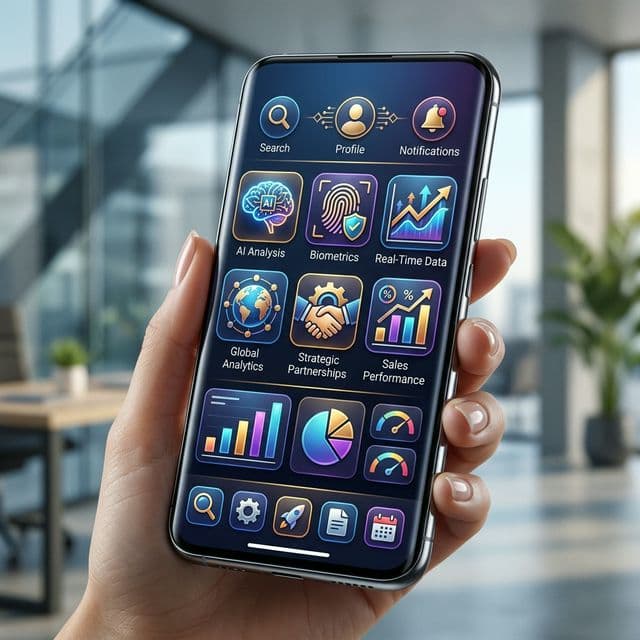
Building a mobile app for your business is a significant investment. The difference between an app that your customers and staff actually use every day, and one that gets deleted after the first session, often comes down to whether the right features were built into the product from the start. Here are the features that matter most for business apps in 2026.
1. A Clean, Intuitive Onboarding Experience
First impressions are everything. When a user opens your app for the first time, they should understand what to do within seconds. A confusing or cluttered onboarding process is one of the biggest reasons apps get abandoned immediately.
Good onboarding means: a simple sign-up flow, a clear explanation of what the app does, and a quick path to the first action that shows value. Progress indicators, tooltips for key features, and the ability to skip optional steps all contribute to a smooth first experience.
If your app requires a login, consider offering social sign-in options (Google, Apple) to reduce friction. The fewer barriers between a user and their first successful interaction, the better.
2. Push Notifications (Done Right)
Push notifications are one of the most powerful tools for keeping users engaged with your app. Order updates, appointment reminders, payment confirmations, and promotional messages can all drive meaningful action. But this feature can quickly become a liability if overused.
The key is relevance and control. Users should always be able to manage their notification preferences within the app. Notifications that feel spammy or irrelevant will lead to users disabling them entirely, or uninstalling the app. Build a notification strategy that is helpful, not annoying.
3. Offline Functionality Where It Matters
Not all users have reliable internet access at all times. Field staff, delivery drivers, and sales teams in Oman often work in areas with weak connectivity. If your app becomes completely non-functional without a strong connection, it will frustrate these users.
At minimum, your app should allow users to view recently loaded data while offline and sync changes when connectivity is restored. For apps used in operational settings, offline support is not optional. It is a core requirement.
4. Strong Search and Filtering
As your app accumulates data, whether that is products, customers, orders, or content, the ability to find information quickly becomes critical. Poor search functionality is one of the most common complaints about business apps.
Good search means instant results, spelling tolerance, filter options by category or date, and the ability to save frequent searches. If your app manages large volumes of data, investing in good search architecture from the beginning is far cheaper than retrofitting it later.
5. Role-Based Access Control
Most business apps are used by multiple types of users, and not everyone should see or do the same things. A sales rep should not have access to financial reports. A delivery driver does not need to edit product pricing. A customer-facing app user should not see internal notes.
Role-based access control (RBAC) lets you define exactly what each type of user can see and do within the app. It protects sensitive data, reduces clutter for each user type, and helps you meet data protection obligations. This is a feature that is much easier to build in at the start than to add later.
6. Analytics and Reporting
If you cannot measure it, you cannot improve it. Your business app should give you visibility into how it is being used. Which features are most popular? Where do users drop off? What times of day see the highest activity?
Even basic in-app analytics can inform better business decisions. For operational apps, reporting dashboards that surface key metrics, sales figures, task completion rates, or inventory levels, add direct business value. For consumer apps, understanding user behavior helps you prioritize future development.
7. Secure Authentication
Security cannot be an afterthought, especially for business apps that handle sensitive data. At minimum, your app should support:
Multi-factor authentication (MFA) for admin and privileged accounts
Encrypted data storage and secure API communications
Session management that logs users out after periods of inactivity
Secure password reset flows that do not expose user information
Businesses in Oman handling customer data should also be mindful of data protection regulations. A development partner who understands security best practices is essential.
8. Seamless Integrations
Your app does not exist in isolation. It likely needs to connect with your payment gateway, CRM, inventory system, accounting software, or other tools your business uses. Building these integrations properly from the start saves enormous headaches later.
Common integrations for Omani business apps include payment providers, WhatsApp Business API for notifications, and ERP systems. A good development team will map out your integration requirements during the planning phase and build an architecture that supports them cleanly.
9. Regular Update Capability
An app that cannot be updated easily is a liability. Both Apple and Google regularly update their operating systems, which can break compatibility with older apps. Beyond technical maintenance, your business will want to add new features, fix bugs, and respond to user feedback over time.
Make sure your development agreement includes a plan for post-launch maintenance. Ask your developer how updates are managed and how quickly critical bug fixes can be deployed. A well-built app should be able to push an update to users within hours if needed.
Frequently Asked Questions
How do I decide which features to build first?
Start with the features that deliver core value to your primary user. Build the simplest version that works, release it, gather real feedback, and then prioritize the next features based on what users actually need. This approach, often called an MVP (minimum viable product), reduces wasted development time.
Do all these features need to be in the first version?
No. A smart development plan stages features across releases. Your first version should nail the core user journey. Additional features like advanced analytics or complex integrations can be added in later releases based on real usage data.
Planning your business app? See how CodeStack approaches mobile app development or read our guide on everything you need to know about app development in Oman. When you're ready to start, get in touch with our team.
About CodeStack
CodeStack is a trusted software company in Oman delivering custom ERP systems, advanced GRC platforms, and scalable digital solutions for growing businesses. We help organizations streamline operations, improve compliance, and accelerate digital transformation through secure, business-focused software built for long-term success.
Start the Conversation
Ready to engineer your
next success?
Let's build something extraordinary together. Our team is ready to transform your vision into a scalable reality.